
Preface
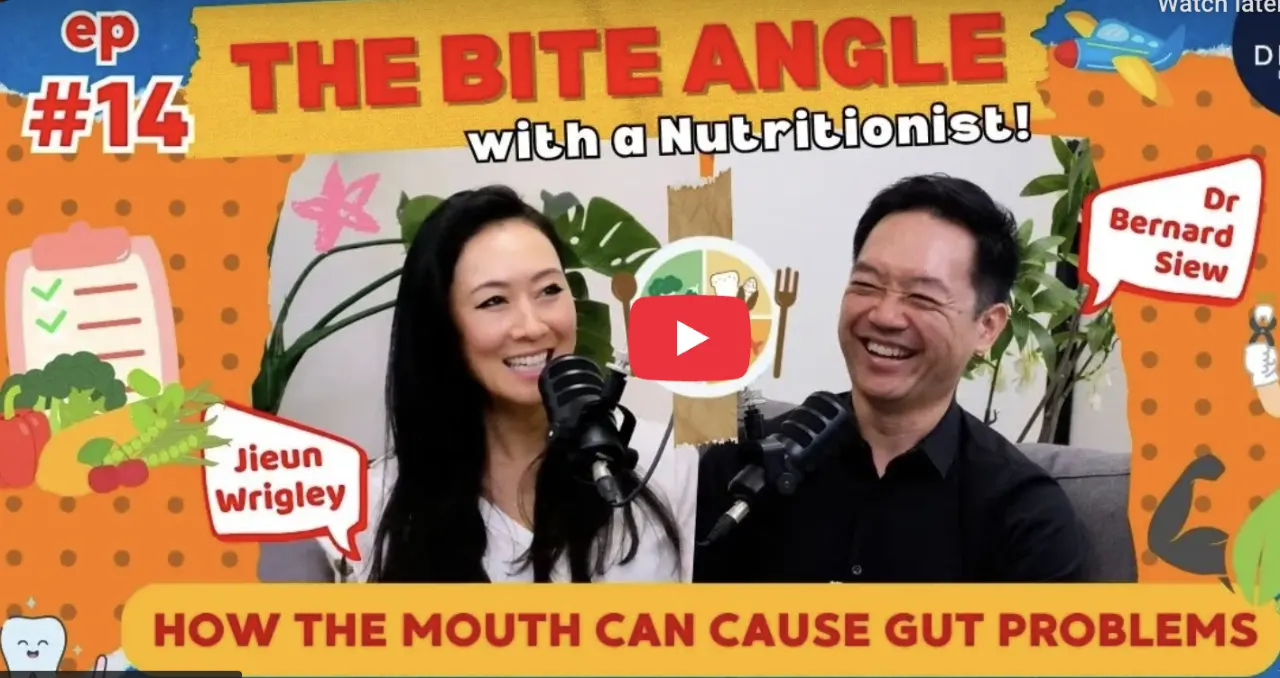
By chance, I met Jieun at the time when I was very curious about the link between our food intake and how it affects our health. It seemed like a concept that everyone should be able to grasp. However, I observed in my dental practice, a variable link between disease and the cleanliness of someone’s mouth. Also, I noticed a variation of predictability of my patients’ healing ability.
I invited Jieun to speak to me on our podcast, The Bite Angle, and she gracefully accepted. The YouTube link to the podcast is below:
The following Q and A is an extra after the podcast conversation. Jieun was very kind to share her information with me and I hope to pass this wisdom to you.
Introduction
Inflammation is at the heart of many chronic conditions—including gum disease, one of the most common oral health issues affecting adults today. While plaque and bacteria play key roles in its development, there is growing recognition that what we eat—and how our body responds to it—that it can tip the balance between health and disease.
To explore this connection, we spoke with Jieun Wrigley, a respected clinical nutritionist and educator who specialises in functional nutrition. With a background in nutrition science from Tufts University and a clinical practice in Singapore, Jieun is known for her food-first approach to reversing chronic inflammation and restoring metabolic function.
In this Q&A, we dive into the links between nutritional dysfunction and gum disease, and how nutrition can support optimal healing before and after dental procedures.
Q: As a clinician with nearly 25 years of experience, I have observed a strong link between stress and gum disease. We have become increasingly aware that stress fuels systemic inflammation—and gum disease is fundamentally an inflammatory condition. Jieun, from your perspective as a functional nutritionist, what is the connection between gum disease and nutrition? Could you share both your observations and what the evidence says?
A: Thanks Dr. Bernie. A great question!
The mouth is the gateway to the digestive system. So absolutely what we put into our mouth affects our health and state of disease.
On a macro level:
It’s important to remember that the skin, mouth, digestive system, and reproductive tracts all host diverse communities of symbiotic and commensal microorganisms that coexist with us. Among these, the oral cavity contains one of the most diverse and complex microbial ecosystems, second only to the gastrointestinal microbiota.
Periodontal or gum diseases arises from an imbalance in dental plaque (microbial biofilm), where bacterial overgrowth is not regulated and this can trigger chronic inflammation in the gums. But you have to remember that gums aren’t inert objects. They are a porous tissue matrix comprised of collagen. Collagen plays a critical role in tissue repair and regeneration. If you’ve ever had a dental procedure, experienced injury, or are recovering from gum disease, collagen plays a critical role in rebuilding damaged gum tissue and reducing inflammation.
On a micro level:
Collagen, the body’s most abundant protein, is critical in providing structural integrity to our connective tissues like gum tissue. So how do we keep collagen strong and intact? That’s where our nutrition especially our micronutrients come to play. Collagen synthesis and function, depend on key micronutrients: vitamin C is essential for collagen cross-linking, zinc and copper support enzyme activity in tissue formation, and minerals like calcium, magnesium, and phosphorus reinforce bone health. Antioxidant vitamins A and E and phytonutrients protect collagen from oxidative damage and slow tissue aging. Without these micronutrients, our gums would atrophy. So from a functional nutrition perspective, a balanced supply of micronutrients form the foundation for resilient tissues and dental health.
Q: In dentistry, we often perform procedures that rely heavily on the body’s healing response—scaling and root planing, periodontal surgery, even routine extractions. From a nutritional standpoint, what are the most important dietary strategies to support healing and reduce inflammation before and after these dental procedures?
A: Healing is a function of the immune system. And guess where 70–80% of the body’s immune cells reside – the Gut! So pre and post dental procedures it is important to make those healthy food choices that are micronutrient dense and support our gut microbiome.
Q: There’s increasing discussion around the gut–oral axis and how the microbiome of the mouth and gut is connected. From your clinical experience, how does poor gut health—and our modern diet—contribute to oral inflammation, especially in gum disease?
A: Building upon my answer to question 1, the mouth is the gateway to the digestive tract. Unfortunately the modern diet is full of overly processed, nutrient poor and overladen with preservatives and additives. So what we eat absolutely impacts our inflammatory levels. When we have poor gut health, there are a wide range of symptoms not just felt in the gut but also seen in bad teeth, dry mouth, unhealthy gums etc. Our body gives us a number of physical indications to remind us that our systems are all integrated and interconnected.
Q: For patients who are dealing with gum disease or recovering from dental procedures, what are three simple, practical dietary changes they can make today to reduce oral inflammation and support healing?
A: Excellent question!
But apologies because I don’t like to give dietary advice unless it’s personalised because each individual is unique as is their health context.
However some practical and functional changes to support overall healing.
- Hydration is critical. Every biochemical reaction in our body requires hydration. Healing is a biochemical reaction. This is foundational.
- Dental procedures are stressful. Try to do them at a time when other stresses in your life are lower. That way we don’t compound the overdrive of cortisol.
- Sleep is the time we heal. Give yourself the time and space to have adequate sleep and rest.
Q: If there was one thing you want everyone in the general public to be more aware of or make a small change in their approach or thoughts toward their food intake, what would it be?
A. Food, especially here in Singapore, is crazy important. It’s multi-faceted. It’s not just energy, its taste, memories, culture, and a driver for social togetherness. These are hugely important facets of food. But we need to also remember that at the end of the day, food is also a chemical instruction given to our body and immune system. So when you’re eating, just think and ask yourself what type of signal is the food you consume sending in your body?