
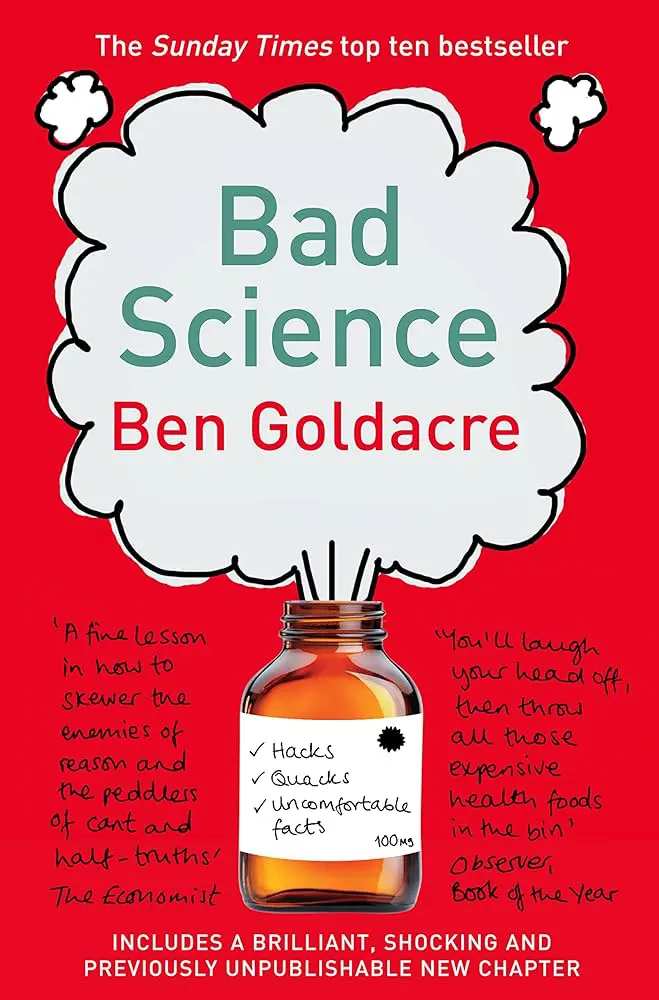
Ben Goldacre’s Bad Science is a witty, sharp, and eye-opening takedown of pseudoscience and the charlatans who peddle it. Written with the surgical precision of a doctor (which Goldacre is) and the comedic timing of a stand-up comedian (which he might secretly aspire to be), the book exposes the dodgy practices, lazy journalism, and willful ignorance that allow bad science to flourish.
The book begins with Goldacre pulling no punches as he skewers the snake oil salesmen of alternative medicine. Detox diets? Utter nonsense. Homeopathy? Expensive sugar pills. Goldacre gleefully explains how these “miracle cures” fail basic scientific scrutiny, often with a well-aimed quip about their absurdity. (Spoiler: Water doesn’t “remember” the toxins it supposedly flushed, no matter how well-meaning your wellness coach is.)
Goldacre then turns his scorn towards Big Pharma, advertising gimmicks, and the media’s sensationalist headlines. He dissects how poor science reporting—filled with scary buzzwords like “toxins” and “cancer-causing chemicals”—misleads the public and fuels unnecessary hysteria. His chapter on how journalists misinterpret scientific studies could double as a guide for spotting nonsense in your daily newsfeed.
But it’s not all laughs and takedowns. Goldacre is on a mission to make us smarter consumers of information. He explains basic principles of the scientific method—double-blind trials, statistical significance, and peer review—with the kind of clarity that makes you wonder why your high school biology teacher couldn’t have been this entertaining.
The book’s finale is a mix of hope and righteous anger. Goldacre insists that science, done right, is a powerful tool for good, but only if we demand better standards from researchers, journalists, and ourselves.
Bad Science is part medicine cabinet raid, part media literacy masterclass, and part comedy roast of everything that’s wrong with modern pseudoscience. It’s the perfect read for anyone who wants to laugh while learning why drinking kale juice probably won’t fix their chakras.
Further comment: I took the time to review this book from my bookshelf because I share similar sentiments with Goldacre. In my work, I hear reports from my patients about the remedies they come across and it is understandable that some don’t discern the difference between science and wishful thinking. Are there gray areas? Absolutely. Ultimately, I hope that my readers will get a better understanding of the science behind the remedies they are willing to try and perhaps to get more opinions. In my personal experience, I have learnt a lot from my patients, my doctor friends and even the stranger or cab-driver that I speak to. Just be aware that you must measure improvements in an objective way and not always go by how you feel. Please read further in an article about my trial of oil-pulling. All the best with Good Science!