
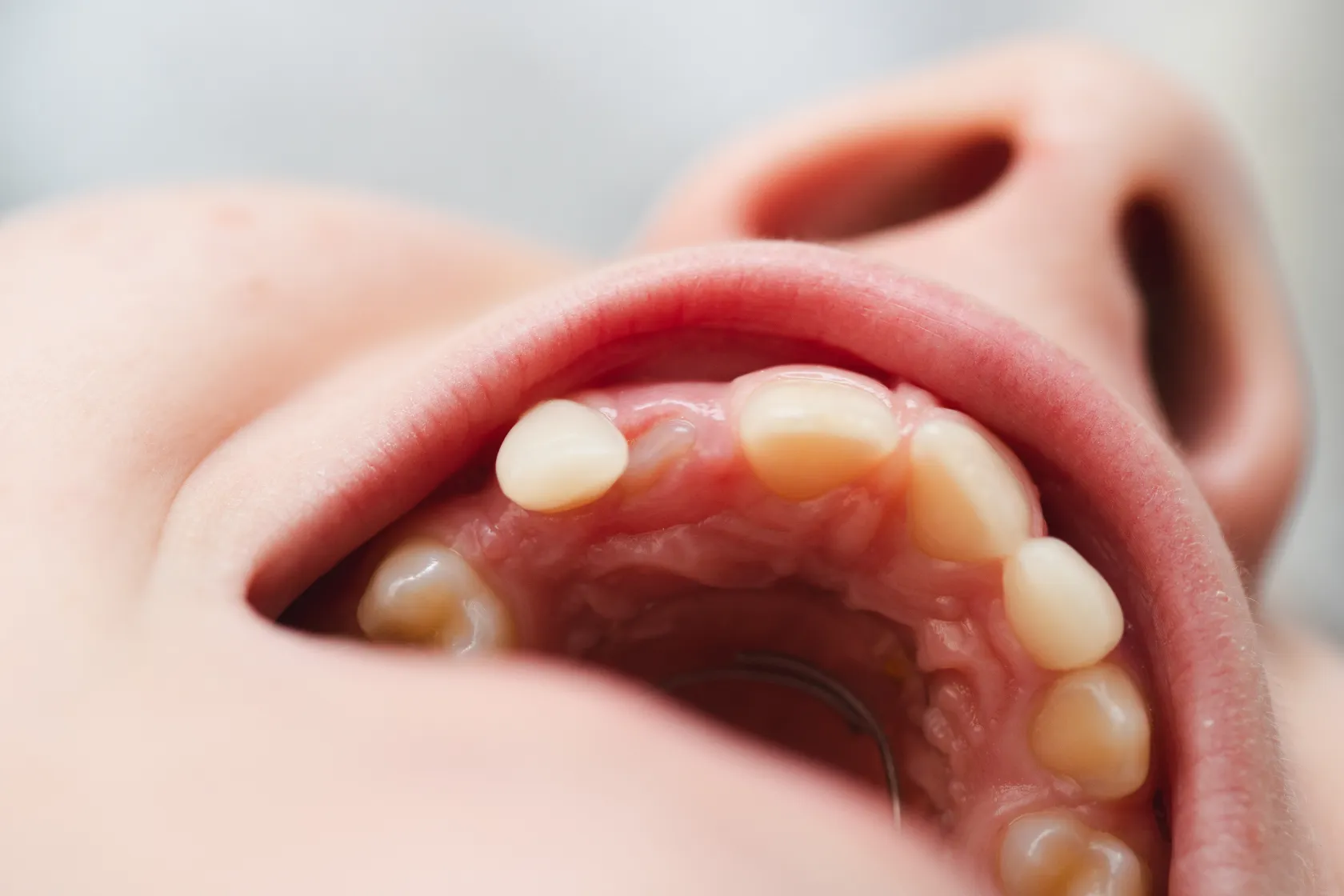
Accidents happen quickly, and it can be alarming when a child falls and breaks a tooth. Baby teeth are crucial for children’s speech development, eating, and holding space for adult teeth, so it’s important to respond appropriately. Here’s a straightforward guide to help you care for your child if they’ve broken a baby tooth.
Step 1: Stay Calm and Assess the Situation
First, take a deep breath. Your calmness will help your child feel less afraid. Quickly assess the injury:
Look for bleeding: Baby teeth have soft tissue and can bleed easily. If there’s blood, gently press gauze or a clean cloth against the gums until it stops.
Check the tooth and surrounding area: Examine whether the tooth is chipped, cracked, or severely broken. Look for signs of swelling or cuts on the lips or gums.
Ask about pain: Children may feel mild to severe discomfort. In case of significant pain or swelling, a broken baby tooth could be affecting the nerve.
Step 2: Clean the Mouth
After stopping any bleeding, help your child rinse their mouth with warm water to reduce bacteria and prevent infection. If a tooth fragment is still in the mouth, gently remove it to avoid choking. If possible, save any large tooth fragments, as the dentist may want to examine them.
Step 3: Apply a Cold Compress
Swelling often follows a dental injury. Use a cold compress on your child’s cheek near the injury for about 10–15 minutes. This reduces swelling and numbs pain. If your child is uncomfortable, over-the-counter pain medication appropriate for their age, such as acetaminophen or ibuprofen, can also help. Avoid giving aspirin to children.
Step 4: Contact the Dentist Promptly
Contact your dentist as soon as possible. Even if the damage seems minor, only a professional can determine the extent of the injury. They will likely schedule an emergency appointment to examine your child’s tooth and may take X-rays to assess any damage to the underlying permanent tooth or the jaw.
What to Expect at the Dentist
At the dentist’s office, you can expect a full examination of the damaged tooth and surrounding area. Here are some possible treatments:
Smoothing sharp edges: If there’s only a minor chip, the dentist may simply smooth sharp edges to prevent cuts.
Filling or bonding: For larger breaks, the dentist may use filling material or dental bonding to repair the tooth.
Extraction: In severe cases, where the root is significantly damaged, the dentist may suggest removing the baby tooth to prevent further pain or infection.
Step 5: Follow Up with Home Care
Once you return home, maintain good dental hygiene to support healing:
Gentle brushing: Use a soft-bristled toothbrush and encourage gentle brushing around the broken tooth.
Monitor your child’s diet: Avoid hard or sticky foods that could irritate the injured area.
Observe for signs of infection: Watch for increased swelling, pain, or fever, which could indicate an infection and require immediate attention.
Key Tips for Prevention in the Future
Children are prone to falls, but a few precautions can help prevent dental injuries:
- Use mouthguards during sports activities.
- Babyproof your home by padding sharp corners and using baby gates on stairs.
- Supervise playtime whenever possible, especially if children are running or climbing.
By following these steps, you can handle the situation calmly and effectively, ensuring your child receives the care they need for a quick recovery.